


Remember the feeling of making something at school that you could bring home to show people? That’s the power of the second part of design foundations: making
Welcome to Design Loft #60 and our exploration of the practice of making things.
In our last issue on Design Foundations, I presented the first of three points on what is a Reuleaux triangle: Design Thinking.
This week, we look at the next point in that shape: making.
Making is the transformative practice of taking concepts, plans and raw materials and arranging them into a form. The quality of materials and craftsmanship coupled with an aesthetic appreciation for the domain, leads to great design.
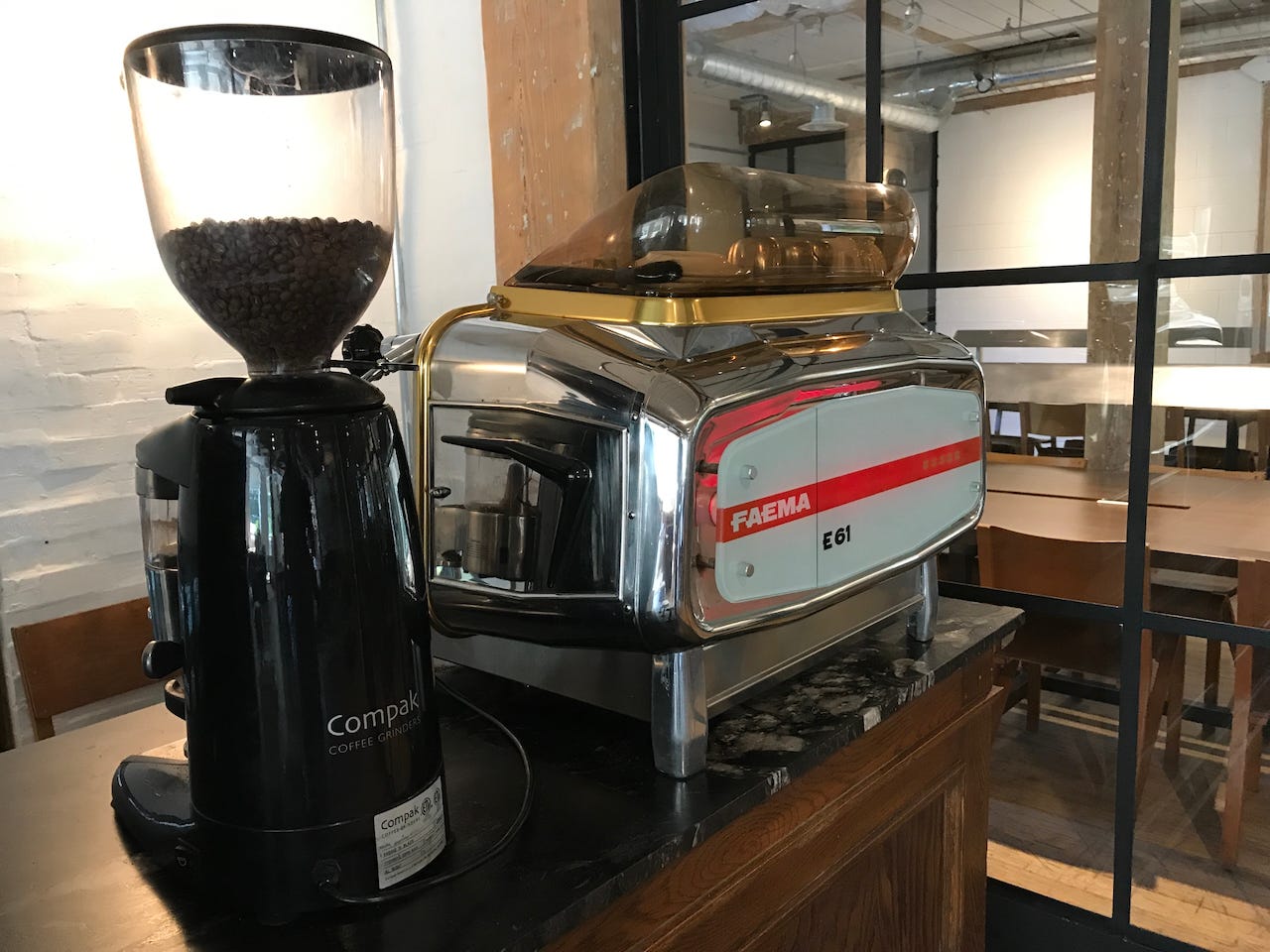
And just like a great coffee, you can conjure it up, but if no one is making it, you’re no more stimulated than you were without it.
Making is the transformative practice of taking concepts, plans and raw materials and arranging them into a form.
Making Things (Happen)
Making is the activity of transforming.
To transform is to bring together things into a form (trans-: “across,” “through,” “beyond,” or “to the other side.”) and formāre: “to form” or “to shape,” derived from forma, meaning “shape,” “figure,” “appearance,” or “mould.)
Design applies the intention and activities of thinking, which we covered last time, and takes it into action.
The core of making involves the following:
Craft. Craft is the application of expertise gained from knowledge, experience, technique, practice, and observation toward the making of something. A skilled maker is often called a craftsman (crafter, or craftsperson). They are someone who applies skill gained from experience, familiarity, and reflective practice.
Materials. While design thinking involves the outline of a design, making involves using materials. These may be physical (steel, wood, stone, plastic, plant matter) or digital. The materials are what goes into the actual thing we’re creating, not just ideas.
Tools. The means of moulding or shaping materials is done through tools. Tools can be used in facilitating design thinking (e.g., sticky notes, mood boards), but for making, the tools need to facilitate production of models, prototypes, and eventual products. Tools are the means of channeling our craft into the materials to shape and develop models, prototypes and products.
Shape. To shape something is to place form upon materials. This is where our sense of aesthetics comes into play. Far from being superfluous, aesthetics are what draws attention, captures interest, provides sensory benefits, and ensures that our products are used. This is about paying attention to our sense of style, purposes of use, and desired outcomes in a manner that is coherent.
Tinker & Fit. These could be two different features, but they are also jointly done. Until our designs are developed and put into place, there’s always a slight issue of misalignment that needs to be addressed. Tinkering with what we’ve made after developing a working prototype is where we make what we’ve created fit. Tinkering and fit come from using evaluative principles to assess what is needed to be adjusted and the tightness and fullness of our fit.
Practice Notes
Making is the part of design that is the most difficult for many in the health professions. The tools of the craft are not ones we’re as familiar with as they might be with Design Thinking or putting things into the world once they are made (e.g., knowledge translation).

Yet, it’s in the making of things that we grow and see the potential limits and opportunities of what we create. In the making, we generate physical, digital, and other artifacts that translate evidence into products. We get more intimate with the choices made, the judgement, the aesthetics of our arrangements, and the materials. It’s often in the making of things and the products of that where we see the flaws in our services, policies, practices, and products.
Making is where prototyping takes places in earnest, not just conceptually.
One reason it’s difficult for health professionals is that its where our knowledge and skills find gaps that are often filled by others (e.g., graphic designers, archiects, UX and digital creators). That’s an uncomfortable place to be. But it’s also where we can learn the most about our designs and pick up some skills. To practice design doesn’t mean that you must master all three components of design’s foundations, but it does require we know them.
Don’t let the unfamiliarity with making things dissuade you. Get to know those you involve in the making of things. It’s in that process that you’ll learn to become more than a design thinker or a knowledge translator into a true designer.
Thanks for reading. As Seth Godin often says: Go make a ruckus.
Or, as I say: Go make health.