


Over the last few issues, we’ve been looking at the three foundations of what it means to design. These are design thinking, making, and deploying and the different skills, knowledge, and actions that take place as part of these foundations.

Welcome to The Design Loft #62, where this issue we’ll look at the practice context for building foundations for design. We will do this by looking at the individual, the organization, and the systems contexts for design practice while commenting on what it takes to generate a practice of design.
The Individual Practitioner
Designing requires many different skills, tools, and a mindset around what it means to design. Most of the previous issues of The Design Loft explore this terrain. In practice, these foundations are built through persistence, commitment, and rehearsal.
It’s the practice of the practice.
What does that look like to the individual seeking to design for health and wellbeing? Among the central qualities that is nurtured through practice is confidence. Design involves enormous uncertainty and experimentation, where the number of unknowns are high, yet confidence in being able to navigate through this is what drives designers.
There’s debate on the role of confidence and its importance, but there’s little debate that being confident in finding and taking a direction and being able to see through the design process is a high correlate with success. Confidence is what allows us to take a chance, it’s not about knowing what will happen after we do. Confidence is in process and opportunities, not necessarily outcomes. That’s what distinguishes design from other areas: confidence is about the belief in being able to find and create a solution through uncertainty, not in a guaranteed outcome.
This is what drew me to design in the first place. I was amazed that designers who had skill, experience, and a craft would confidently claim they could design something that they’d never made before and then deliver. It’s not arrogance, but an understanding of the process needed to take new thinking and transform it with materials and what we spoke of in the earlier issues in this series.

Tied to this is the role of practice itself -- persistence and consistency in designing things. Design isn’t something you do on holidays and special occasions; it needs to be practiced regularly. How often, and to what extent is less clear; but it needs to be enough that you can gain some facility with tools, theories, and activities. A mindset isn’t nurtured by events, but everyday actions. Craft doesn’t come from lessons, but applying our thinking and making and reflecting upon that.
Organizational Practice
We practice individually within organizations, or at least an organizational context. Organizations are the institutions that deliver care, enact policies, and promote wellbeing. These are where many of us are employed or are the partners or clients working with us.
At the institutional level, leadership is critical. There has to be an expressed commitment and direction for design activities for us to practice. Without it, we are left creating experiments that are disconnected from the context in which their products are divorced.
This buy in to design also includes supporting the collaborative activities that most designs require. Organizations have to enable their staff and teams to think, play, act, and create together in service of innovation.
These are cultures of design, not just design actions.

We explored some of this in an earlier issue, looking at the case study of Sault Ste. Marie Hospital’s Emergency Room waiting app that was an innovation in design and delivery, and reflected a culture of design, not just a single act. Leadership, encouragement, and a place where there is openness to try things is what creates the space for design to thrive.
Individual innovation units rarely thrive beyond themselves, not because of their ideas or process, but because the culture of innovation doesn’t extend beyond it’s boundaries. It’s the culture of leaders, teams, and staff across the organization who are willing to try new things, support divergent thinking, and have the willingness to attempt something that might not work. It’s also about creativity, too.

Systems Practice
Systems are the greatest point of leverage and the most difficult to facilitate change change. Two fields of practice where we can draw some lessons from are the computer / digital technology space and education.
The former is largely tied to the highly competitive landscape and profit motive, which have created cultures of innovation that are sometimes described through such mantras as “move fast and break things” or “fail faster to succeed sooner”.
The latter (education), is a result of the constant transformation that comes from new knowledge, new students, and high demands placed upon educators and learners to adapt, grow, and change. This has created a culture that is much more open to new ways of working than others.
Neither of these cultures are immune to the effects of sunk costs, inertia, and lack of catalytic leadership or opportunities. However, they are spaces where systemic change is possible and has been exemplified many times over.
Social workers have to be creative to deal with the variety and complexity in their caseloads. Nurses and care workers often have little choice but to improvise in their care decisions. The same is true for childcare staff. These are all care contexts where there is a recognized dynamism and culture of practice innovation, within constraints.
These are examples of where systemic design can be nurtured. Too often, these innovators are not provided with the means to share and market their products. The knowledge translation doesn’t occur in a systemic way, rather a more informal approach.

Providing opportunities for learning and sharing across contexts can help. Enlisting the cross-juridictional and context-spanning resources of a professional association, regulatory body, or practice network is another way to build systemic capacity.
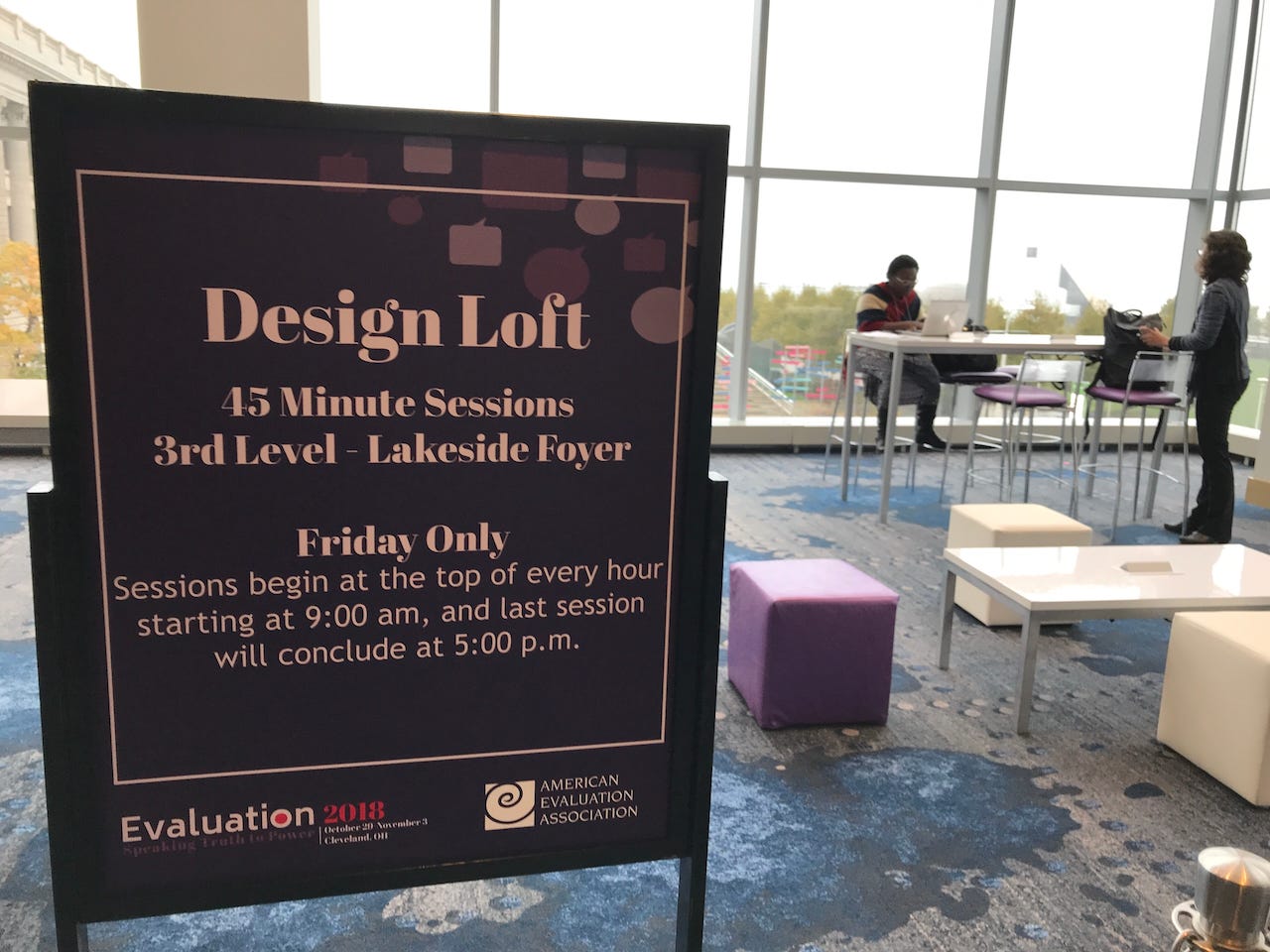
The American Evaluation Association sought to do this beginning with the leadership year of President John Gargani, who wanted to emphasize design during his term. That resulted in the first of many Design Loft training workshops and micro-conferences that took place within the annual AEA conference between 2016 and 2019.
Like many things, these three foundational facilitators exist like an index: the more of them you have, the more likely you are to succeed in bringing design to health. For starters, try whatever you can with whomever you can. But whatever you do, just practice.
Thanks for reading and designing with me.
If you’re looking to enhance your skills further and want to foster these design foundations in your organization or network, let’s talk.
"Confidence is in process and opportunities, not necessarily outcomes" is one of the clearest descriptions of design confidence I've read. It would help a lot of people early in their careers, who often wait to feel sure of the answer before they start. Your point about innovation units not thriving beyond their own boundaries rings true too: a team can design well and still be an island. In your experience, what's the first sign that a design culture is spreading past the team that started it?