


Welcome to The Design Loft!
Few things will elevate your practice than a great idea that is transformed into something. We aspire to make things better by making better things — yet often struggle with what those things ought to be.
SCAMPER is a framework that can help you take nascent or subconscious ideas to the surface. It’s also a way to get out of creative ruts or reveal the latent creativity in you.
The number one thing I hear from professionals embarking on innovation is, “I’m not creative.” There’s this myth of being “born” creative or not being a creative person. It’s all a lie.
SCAMPER is one technique that can unlock your creativity by providing a set of frames to help you identify innovation opportunities anywhere.
What is SCAMPER
The SCAMPER method was developed by Bob Eberle in 1971 as a structured creative thinking technique, building upon the foundational work of Alex Osborn, who created brainstorming and published a list of idea-spurring questions in his 1953 book “Applied Imagination.” Eberle organized Osborn’s questions into a memorable acronym—Substitute, Combine, Adapt, Modify, Put to other uses, Eliminate, and Reverse (SCAMPER)—to make the creative process more accessible, particularly for educational settings. Originally intended as a tool to stimulate imagination in children, SCAMPER has since become a widely adopted design technique that helps individuals and teams break out of conventional thinking.
The Decision Lab goes into a more detailed history of SCAMPER and its early use. Tash Willcocks recently posted a two-part series on SCAMPER that serves as a good jumping-off point for us for the next chapter. Tash’s series is a great reference point for you after reading this lesson for some examples in how to apply SCAMPER in different, non-health contexts.
Enkindle Creativity
Consider the start of any design journey. You might notice a problem or experience something that makes you think: “This could be better.” That’s a design moment.
What happens next usually begins with a question like:
How might this be better?
How might we improve things?
What could we do to change the outcomes here?
This is one of the most paralyzing parts for novice and experienced designers alike. How do we convert our recognition of a problem or situation into ideas and, eventually, improved outcomes?
Enter: SCAMPER
SCAMPER’s genius is that it inspires you to think about the everyday from different perspectives. Its simple framework guides you to consider other ways to explore something and ways to inject something innovative. It takes as its core premise that innovation is as much about how we perceive things as it is about what we generate from those perceptions. (For more on this, consider Lesson 6, where we introduced The Design Helix).
Perception shifts encourage us to see the same issue through a different lens. Let’s dive into how SCAMPER does this.
Perception Shift: SCAMPER in Action
Let’s look at the different ways SCAMPER can help you to innovate.
1. Substitute.
This is a common innovation strategy. By swapping something (or someone), it’s possible to get to a root cause. This asks of you: what is (this design) being asked to do? When you do this, you can see how a common role might not need to be performed the way it currently is.
One example is substituting community health workers for physicians: In resource-limited settings, trained community health workers deliver basic preventive care, health education, and chronic disease monitoring. Programs like Brazil’s Family Health Strategy show how this substitution improved access while reducing costs. We’ve also seen this with the move to allow pharmacists to prescribe medications for certain common conditions.
2. Combine.
Some of us remember the old Reese’s Peanut Butter Cup advertisements, which promoted how two things come together (like peanut butter and chocolate). The same innovative idea comes through with this technique. Consider what happens when you bring two different things together.
A simple, but beneficial model of this is the Pharmacy + Primary Care Clinic movement. CVS MinuteClinic in the United States, and similar models, combine retail pharmacy operations with basic primary care services, providing convenient, accessible healthcare for minor illnesses and preventive services in one location.
3. Adapt
Adaptation is a cornerstone of resilience and designing for complexity. We saw this approach during the COVID-19 pandemic, when public health units frequently modified their procurement practices and procedures in response to needs, opportunities and limitations. This was reactive; however, we can do as much by design ahead of disasters.
SMS for Medication Adherence: Text messaging technology, initially designed for social communication, has been adapted to send automated medication reminders and appointment notifications. Programs in HIV treatment in Africa have achieved 20-40% improvements in adherence rates using this approach, which adapted traditional paper notes.
4. Modify
COVID-19 was a laboratory for innovations (all puns intended). Among the best examples of this was the rapid shift from lab-only testing to developing methods that enabled people to screen for COVID-19 at home, rather than using costly (and potentially risky) lab-based tests in situations where health risks were lower (e.g., non-immunocompromised patients). The technology developed along with public policies and production innovations took something that was normally clinic-based and made it easily available at home. Better, more timely screening likely saved tens of thousands of lives
Rapid Home Tests vs. Lab-Based Testing: COVID-19 rapid tests modified the traditional laboratory testing model by dramatically reducing complexity, time, and infrastructure needs—sacrificing some accuracy for massive gains in accessibility and speed.
5. Put to Other Use
What if you could take a common technology like a video game console and use its accelerometer and tracking technologies in ways to assist people with mobility and cognitive problems in their recovery? That’s what physical therapists have discovered by repurposing the popular Wii system for clinical use.
Nintendo Wii for Stroke Rehabilitation: Physical therapists repurposed gaming consoles and their motion-sensing controllers as engaging, affordable tools for motor skill rehabilitation, making therapy more enjoyable and accessible than traditional methods.
6. Eliminate
Design is often about taking things away, not just adding things. Famed designer Dieter Rams once said:
Good design is as little design as possible
Removing Appointments from Urgent Care: Walk-in clinics eliminated traditional appointment scheduling, reducing administrative burden and wait times while better serving patients with acute, non-emergency needs. The Netherlands has organized its health system around specialized clinics for common conditions, rather than adding to family practitioners' workload, by eliminating inefficient or poorly directed visits. I’d encourage you to listen to Tara Kiran’s series on the Dutch system on the Primary Focus Podcast.
7. Reverse/Re-arrange
Sometimes turning something on its head can make all the difference. The movement toward greater home care has shown itself to be a remarkable innovation that saves money, time, and allows many people to stay where they feel most health-ful: home.
Hospital-at-Home Programs: Reversing the traditional model of bringing patients to hospitals, these programs bring hospital-level acute care directly to patients’ homes. Studies show comparable outcomes with higher patient satisfaction and lower costs.
Creativity Ignited
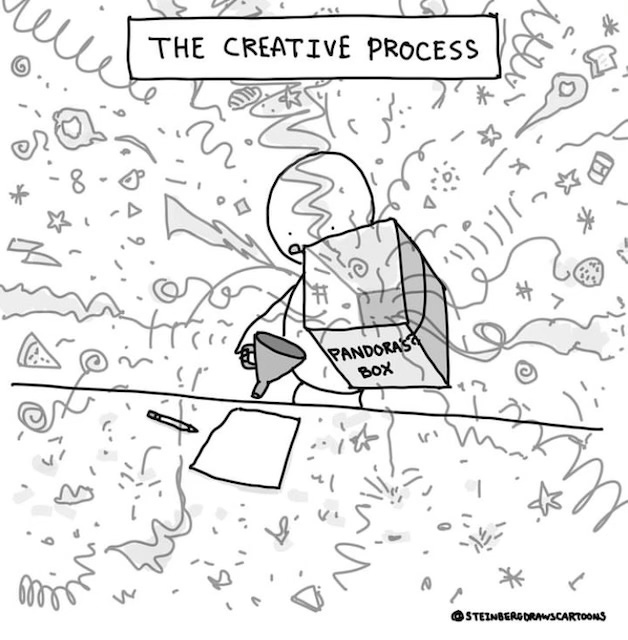
By running through a SCAMPER, we can start to imagine how a problem with a service or product might be reframed to allow us to make some progress on it. Once you start, the opportunities expand and the directions become more plentiful. That momentum is often what will enable you to make headway on even the most complex problem or circumstance.
For our Premium subscribers, stay tuned for details on upcoming coaching sessions on supporting SCAMPER in practice. This will include additional materials to help ignite creativity in your teams.
If this sounds interesting to you, consider becoming a paid or premium subscriber and enrolling in The Design Loft. Also, if you need specific support in designing for health in your organization, please feel free to reach out and book a no-fee, no-obligation conversation with me to see how I can help you.
Happy designing and thanks for reading!
References for SCAMPER Examples
1. Substitute - Community Health Workers
Macinko, J., & Harris, M. J. (2015). Brazil’s Family Health Strategy—Delivering Community-Based Primary Care in a Universal Health System. New England Journal of Medicine, 372(23), 2177-2181. https://doi.org/10.1056/NEJMp1501140
Wadge, H., Bhatti, Y., Carter, A., Harris, M., Parston, G., & Darzi, A. (2016). Brazil’s Family Health Strategy: Using Community Health Care Workers to Provide Primary Care. Commonwealth Fund Case Study. https://www.commonwealthfund.org/publications/case-study/2016/dec/brazils-family-health-strategy
Rasella, D., Harhay, M. O., Pamponet, M. L., Aquino, R., & Barreto, M. L. (2014). Impact of primary health care on mortality from heart and cerebrovascular diseases in Brazil: A nationwide analysis of longitudinal data. BMJ, 349, g4014.
2. Combine - Retail Clinics (CVS MinuteClinic Model)
Ashwood, J. S., Mehrotra, A., Cowling, D., & Uscher-Pines, L. (2017). Direct-To-Consumer Telehealth May Increase Access To Care But Does Not Decrease Spending. Health Affairs, 36(3), 485-491.
Weinick, R. M., Pollack, C., Fisher, M. P., Gillen, E. M., & Mehrotra, A. (2010). Policy Implications of the Use of Retail Clinics. RAND Corporation Technical Report TR-810. https://www.rand.org/pubs/technical_reports/TR810.html
Pollack, C. E., & Mehrotra, A. (2010). The Growth of Retail Clinics and the Medical Home: Two Trends in Conflict? Health Affairs, 29(5), 998-1003.
3. Adapt - SMS for Medication Adherence
Mbuagbaw, L., Thabane, L., Ongolo-Zogo, P., Lester, R. T., Mills, E. J., Smieja, M., ... & Lehana, T. (2012).The Cameroon Mobile Phone SMS (CAMPS) Trial: A Randomized Trial of Text Messaging versus Usual Care for Adherence to Antiretroviral Therapy. PLoS ONE, 7(12), e46909. https://doi.org/10.1371/journal.pone.0046909
Nsagha, D. S., Lange, I., Fon, P. N., Nguedia, C. A. A., & Tanue, E. A. (2016). A Randomized Controlled Trial on the Usefulness of Mobile Text Phone Messages to Improve the Quality of Care of HIV and AIDS Patients in Cameroon. The Open AIDS Journal, 10, 93-103.
Demena, B. A., Artavia-Mora, L., Ouedraogo, D., Thiombiano, B. A., & Wagner, N. (2020). A Systematic Review of Mobile Phone Interventions (SMS/IVR/Calls) to Improve Adherence and Retention to Antiretroviral Treatment in Low-and Middle-Income Countries. AIDS Patient Care and STDs, 34(2), 59-71.
4. Modify - Rapid Home Tests
For COVID-19 rapid tests, general references about the shift from laboratory to home testing:
Vashist, S. K. (2017). Point-of-care diagnostics: Recent advances and trends. Biosensors, 7(4), 62. https://doi.org/10.3390/bios7040062
Crozier, A., Rajan, S., Buchan, I., & McKee, M. (2021). Put to the test: Use of rapid testing technologies for COVID-19. BMJ, 372, n208.
5. Put to Other Use - Nintendo Wii for Rehabilitation
da Silva Ribeiro, N. M., Ferraz, D. D., Pedreira, É., Pinheiro, Í., da Silva Pinto, A. C., Neto, M. G., ... & Masruha, M. R. (2015). Virtual rehabilitation via Nintendo Wii® and conventional physical therapy effectively treat post-stroke hemiparetic patients. Topics in Stroke Rehabilitation, 22(4), 299-305.
Marques-Sule, E., Arnal-Gómez, A., Buitrago-Jiménez, G., Suso-Martí, L., Cuenca-Martínez, F., & Espí-López, G. V. (2021). Effectiveness of Nintendo Wii and physical therapy in functionality, balance, and daily activities in chronic stroke patients. Journal of the American Medical Directors Association, 22(5), 1073–1080. https://doi.org/10.1016/j.jamda.2021.01.076
Karasu, A. U., Batur, E. B., & Karataş, G. K. (2018). Effectiveness of Wii-based rehabilitation in stroke: A randomized controlled study. Journal of Rehabilitation Medicine, 50(5), 406–412. https://doi.org/10.2340/16501977-2331
6. Eliminate - Walk-in Clinics Removing Appointments
Covered under retail clinic references above (Weinick et al., 2010; Pollack & Mehrotra, 2010)
7. Reverse/Re-arrange - Hospital at Home
Leff, B., Burton, L., Mader, S. L., Naughton, B., Burl, J., Inouye, S. K., ... & Burton, J. R. (2005). Hospital at Home: Feasibility and Outcomes of a Program to Provide Hospital-Level Care at Home for Acutely Ill Older Patients. Annals of Internal Medicine, 143(11), 798-808.
Shepperd, S., Iliffe, S., Doll, H. A., Clarke, M. J., Kalra, L., Wilson, A. D., & Gönüllü, N. (2016). Admission avoidance hospital at home. Cochrane Database of Systematic Reviews, (9).
Levine, D. M., Ouchi, K., Blanchfield, B., Diamond, K., Licurse, A., Pu, C. T., & Schnipper, J. L. (2020).Hospital-Level Care at Home for Acutely Ill Adults: A Randomized Controlled Trial. Annals of Internal Medicine, 172(2), 77-85.