Welcome to the latest Design Loft! I’m so glad to have you here and a part of this project. There are few things like connecting with fellow curious, creative souls looking to elevate their impact in what they do through design. The things we make shape who we are, our organizations and our communities, so it’s pretty important.
Design is also the discipline of innovation: making things to address unmet needs and situations.
Today’s lesson examines design as an idea and practice: what it is, how it’s done, and ways to think like a designer. We’re going to walk through a model called The Design Helix, which is a way to explain the various activities involved in designing something. It’s not a recipe or a prescription but a general orientation to what goes into any design project and how it can be used to help you create better things.
We’ve also got many links, tools, and tips this week to help you get into Atomic Design, learn how to learn better in remote conferences, and why boredom and bedtime could be your creative secret weapon.
Put the coffee on; let’s get learning.
Elevated Ideas: Links of Interest
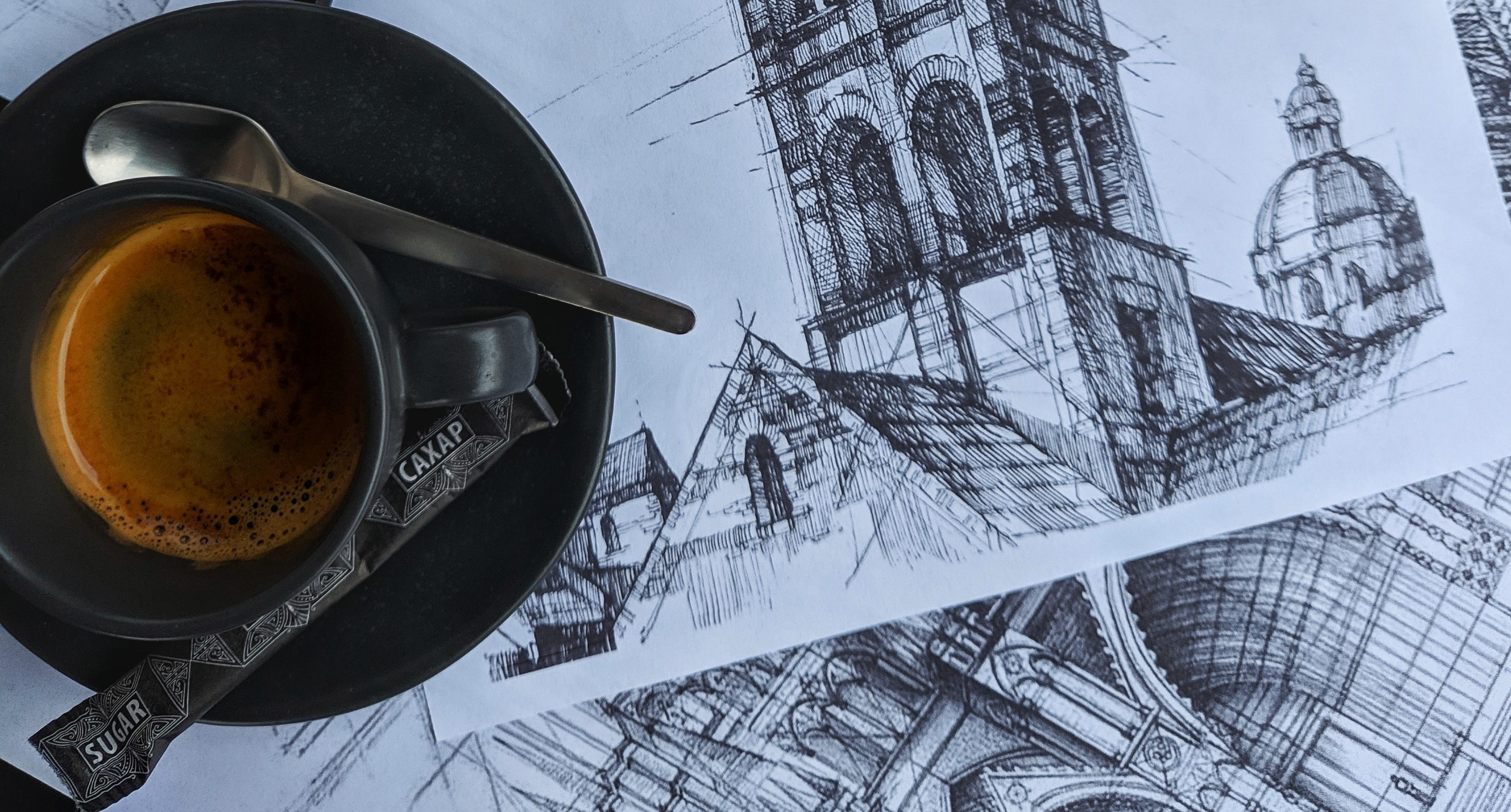
Nir Eyal looks at why bedtime often brings with it creative ideas. Relaxation, lack of distractions, and boredom are the key. These are all things we can design into our days or take advantage of at bedtime. Bring your notebook to bed!
Get good at hosting, make people look good, and pickle yourself (?). These are some of the ten surprising ideas about design that aren’t as silly as it sounds. Ben Strak at Design Lobster highlights interesting, quirky ideas about how to make better things.
The UK Design Council’s Design for Planet festival just wrapped up. The events are being posted online, and judging from the buzz online (I couldn’t tune in live), the event was a huge success. Catch up on what you missed in the coming days.
Design research for digital products often gets bogged down in details. Atomic Research is a system that aims to organize those insights. Here’s a cheat-sheet on how to do it, a talk on how it works, and a tool that shows what it looks like in practice.
Where do you start if you want a design-oriented organization? Erik Stolterman Bergqvist believes it comes down to four sets of competencies: mind sets, knowledge sets, skill sets, and tool sets. Build these to create a designerly organization.
Jennifer Polk recently went on a bit of a Twitter (or X?) rant on how in-person and online conferences are poor vehicles for learning and the issues with Zoom. She offers some insights into why this is the case and how we could design both better.
Lastly, Lego is no longer using recycled plastic in its pieces. The reason offers a case study of why evaluation and design need to go together. when Lego assessed the project's environmental impact throughout its supply chain, it found that producing bricks with recycled plastic would require extra materials and energy to make them durable enough, resulting in higher carbon emissions.
Review: Design by John Heskett

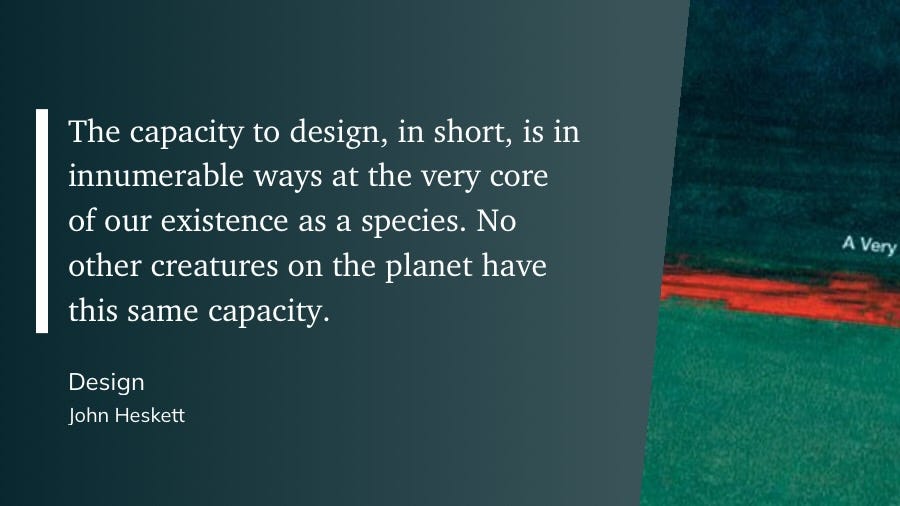
This is one of my most recommended books for people looking to understand design in its broadest sense. John Heskett was a historian and industrial design scholar who wrote extensively on the craft of design. As someone who explored how people created physical things for widespread use, Heskett regularly confronted the tensions between theory, practice, and praxis that propelled his writing. This book, part of the Oxford Short Introduction Series, outlines the central ideas behind design and its influence on the world around us. As the earlier quote shows, Heskett argues that design is part of what makes us human. Framed that way, the implications of understanding design, its practice, its effects, and its organization become much more than academic.
This short book is a good introduction for generalists and a great refresher for more experienced practitioners — whether professional designers or not. It’s an accessible orientation to the art and science of creating things with a purpose to be used and enjoyed.
Today’s Lesson: Design (+ Thinking)
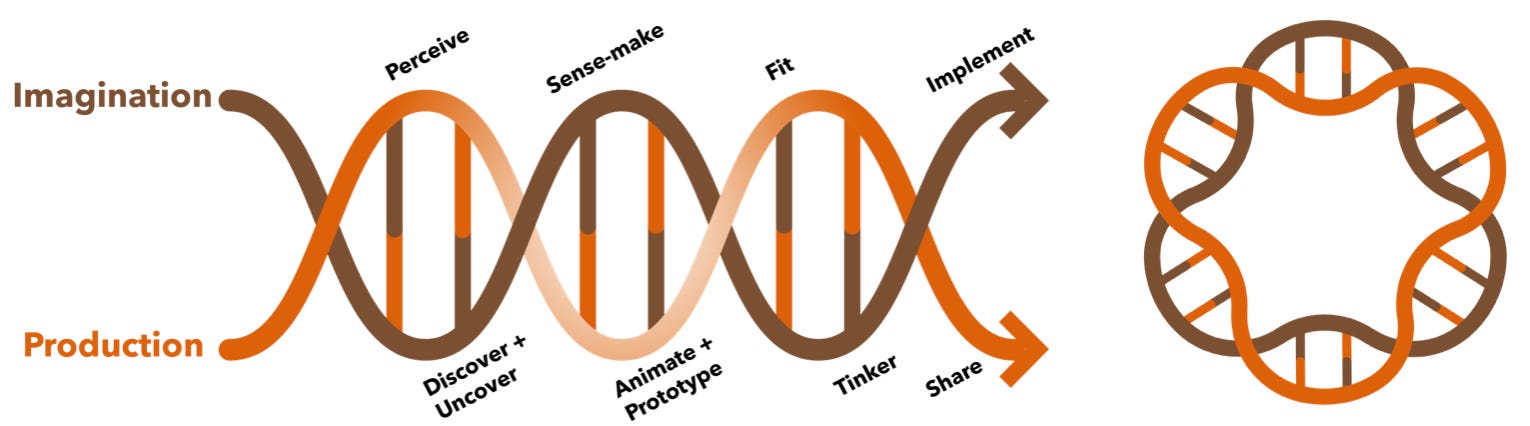
As John Heskett stated above, design matters. Debbie Millman’s award-winning podcast is named as such. This week’s lesson is focused on design itself. Design is about imagination and production coming together. We can’t just think of new things; we must transform those ideas into things that make a difference. That difference could be making things easier, more accessible, or to add value to something we’ve never had before.
Design is a stance as well as a craft. Making things that work, that people enjoy, that solve problems or address situations and unmet needs, requires some discipline, technique, and a creative orientation. As we saw in the links section above, it also involves sets: mind sets, knowledge sets, skill sets, and tool sets. The Design Helix is a model that helps you align all of these. It’s not a prescription but a guide to making things for a living planet.
Design Helix
WHAT: Design is about making the things around us in service of our lives
HOW: Processes, tools, and strategies linked together to help listen, learn, and adapt.
WHY: Better design increases impact and reduces harmful effects.
WHEN: Anytime there is a situation where we can improve things.
This week’s lesson comes in two parts, with the second arriving in your inbox in the coming days. The slides for the upcoming video are ready and available here.
The video lesson will be part of a set that comes next.
References
John Heskett (2005). Design: A very short introduction (Vol. 136). Oxford University Press, USA.
Kat Holmes (2018). Mismatch: How inclusion shapes design. The MIT Press.
Bruce Mau (2020). MC24: Bruce Mau’s 24 Principles for Designing Massive Change in your Life and Work. New York, NY: Phaedon.
Harold G. Nelson & Erik Stolterman,(2014). The design way: Intentional change in an unpredictable world. The MIT Press.
Cameron Norman. Evaluation and Design: Language for Innovation. Censemaking.
John Thackara (2005). In the Bubble: Designing in a Complex World. The MIT Press.
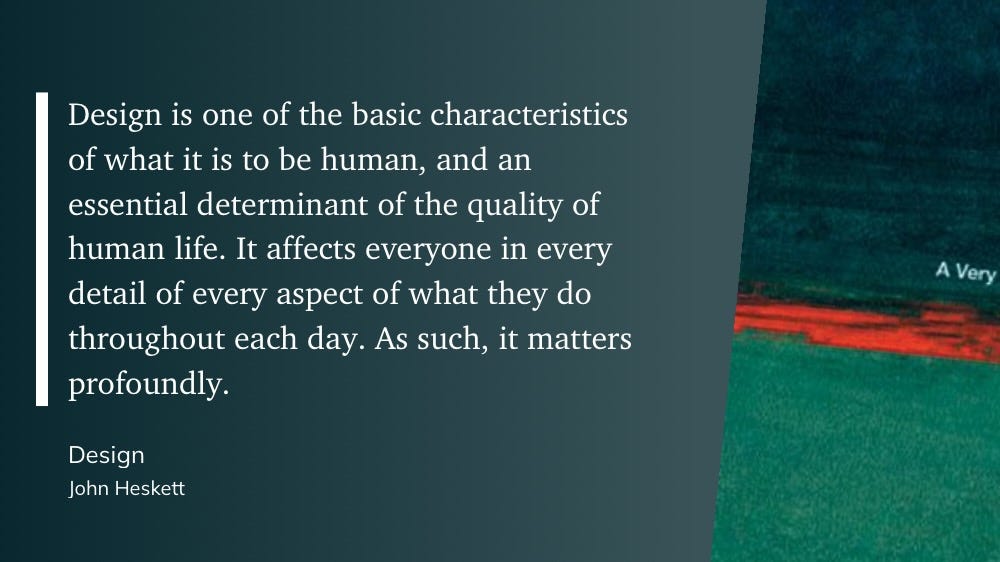
Thanks for reading! I'll leave you with one more quote from John Heskett about the special place for design in human life.