Welcome to The Design Loft and this second post on the central issue framing what we’re all about: the thinking and making of value.
Design has been described by Marty Neumeier as the discipline of innovation. It’s all about how we make things to improve our situation and build on what we know to learn and do new things.
Design practice is made of thinking and making. It’s a stance, a way of seeing situations and contemplating ways to make things better (more manageable, accessible, enjoyable, beautiful, and valuable) while making better things (less harmful, more beneficial, and higher quality).
In this issue, we build on last week’s newsletter and explore what it means to design using the Design Helix framework as a guide. The aim is to give you confidence in using your imagination to produce things of value and innovate. And as Joe Namath said, when you have confidence you can have fun.
We also are looking at the issue of scale, the deeper meaning of design, how to design better evidence reports (and presentations), and more. At the root of all of this is building up some confidence in being able to explore situations, generate ideas, and turn it all into a design that inspires. To that end, let’s channel Joe and have some fun.
Elevated Ideas: Links of Interest
Scaling our ideas from a small start-up doesn’t always mean bigger. This paper from the McConnell Foundation looks at scaling impact, encouraging us to look out, up, deep, and beyond, for inspiration and guidance on how to take ideas to scale.
What about scaling impact? We got that covered, too. John Gargani and Robert McLean published a series of case studies exploring impact and scale. Their book (reviewed below) will challenge your thoughts on impact and its assessment.
How do you take a South African-inspired restaurant and make it global and feel authentically local? This case study on designing a Nando’s restaurant is instructive on design, place-making, service, and branding.
How does consumer software seem to get worse over time, not better? Doesn’t all that data make us better at designing good things? Ivan Vendrov draws on cases like OK Cupid to show the tyranny of the marginal user and how we all suffer because of them.
Jake Bittle and Naveena Sadasivam from Grist profile the latest in urban planning and technology to show how we can design cities that are more heat-resistant and suited for a world with temperatures rising.
We’ve got another gem from my wonderful colleague Sheila B. Robinson on considering audience engagement in our design and evaluation plans for instruction and learning. It’s not about the activities; it’s about principles and purpose by design.
Our colleague Chris Lysy’s 2023 Halloween comics are ready to slay the idea that lousy communication, scope creep, and bad behaviour equal good practice. A little humour goes a long way to avoiding scaring people away from good work.
Review: Scaling Impact
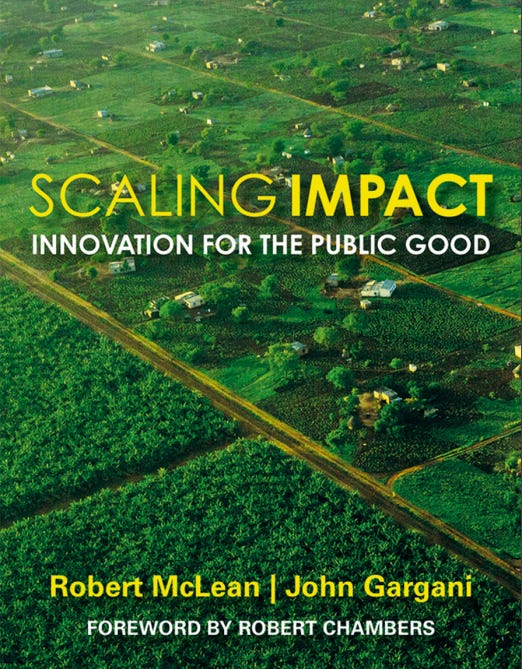
Robert McLean and John Gargani tackle the big question: what does it mean to scale innovations and achieve impact? This book, (available for free), was commissioned by the International Development Research Centre and draws on the author’s experience working with leading scientific and entrepreneurial innovators across Africa, Asia, the Caribbean, Latin America, and the Middle East. The book begins by outlining four guiding principles to guide the work: justification, optimal scale, coordination and dynamic evaluation. The authors then take the reader on a journey through case studies where a blend of design and evaluation come together to take promising ideas and scale them beyond the initial prototype.
Scaling impact means seeking an optimal result where the impacts that are proven effective and desirable to stakeholders are cultivated and encouraged; and those that may cause harm, lead to waste, or are not desired by the impacted community are inhibited.
The book’s conclusion seeks to stimulate conversation on what it means to achieve impact and how its definition, measurement, and design is negotiated and evolving. The key message: there is no one way to scale impact, but there are many ways not to.
We encourage others to borrow what is useful, abandon what is not, and develop what is incomplete or inadequate. We have worked to identify a starting point with the hope that innovators, working alongside their communities, will use it to identify their own pathways and destinations.
This practical project tackles complex topics while challenging the prevailing wisdom around what scale is and what impact means. It’s a helpful book for anyone looking to put their idea into the world, especially in international contexts.
Today’s Lesson: Design (+ Thinking) - Part 2
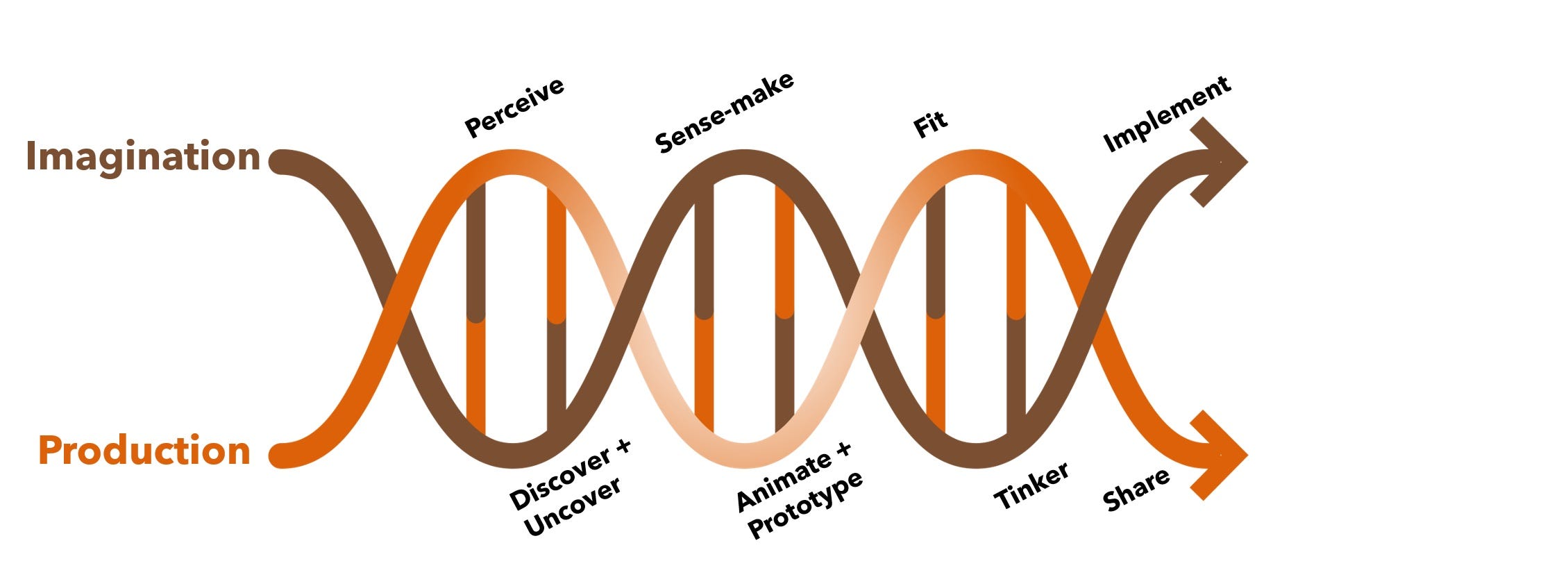
We continue with the lesson from last week with three videos talking about design — both thinking and making. If you recall, we introduced The Design Helix framework that combines imagination and production in our efforts to design for living systems — not some abstract users or products.
This week, the lesson videos are up, and we continue the conversation about what it means to think and act like a designer.
Design Helix
WHAT: Design is about making the things around us in service of our lives
HOW: Processes, tools, and strategies linked together to help listen, learn, and adapt.
WHY: Better design increases impact and reduces harmful effects.
WHEN: Anytime there is a situation where we can improve things.
A reminder that the original files can be accessed here. The links to the videos are here:
Practice notes on using the Design Helix and designing for people and systems.
As I noted in the lessons, there are many frameworks out there. The Design Helix was developed to serve as a teaching tool and isn’t meant to be used as a recipe but as a guide. No guide is perfect, and design practice doesn’t always follow the steps or process outlined in the Design Helix (or any model). It provides you with some things to consider as you go forward in your journey toward creating something worthwhile.
References
Some other frameworks that help explain design practice include:
The Double Diamond is among the most widely cited models out there. It’s simple and straightforward and has a long history described in this article from its founding organizers at the UK Design Council.
Beginner’s Guide to Design Thinking outlines a few other models, including the Stanford d-School stage model.
Formulating a design process and articulating design thinking is with critics, but as Kevin Richards points out, many of these criticisms miss the point.
My article Design Thinking, Design Making speaks to some of the other tensions between design, design thinking, and the craft of making things.
Thanks for reading. Please share the Design Loft with anyone looking to elevate the impact of their work and make things better by making better things.
And remember Joe Namath’s charge: have fun.
See you next time! - Cameron