


Welcome to The Design Loft!
In the past few issues, we’ve been diving into the topic of prototyping — making models of our ideas before putting them into the world. Today, we conclude this series by examining how we evaluate prototypes and the questions we might want to ask.
We will also look at the what and how of service design, introduce you to a 24-hour crash course on inclusive design, give you some new tools for improving things, and more.
Let’s dive in.
Elevated Ideas: Links of Interest
Whether you’re a graphic designer or someone looking to spruce up your digital stuff — good fonts make a difference. Free Faces is a
Inclusive Design 24, a unique 24-hour design festival, was held in September and is now available on its YouTube channel. It’s a feast of ideas, examples, and speakers worldwide on various issues tied to inclusive design.
Results-based accountability is a form of evaluation that looks at what you achieve, not what you say you will do. It combines shared language, more focused performance measures, and processes for tying your data together that designers can use.
Designify is an AI-assisted tool that helps you build out a variety of uses for your images to help you explore possible ideas. It’s less about generating a finished product and more about seeing possibilities using your images as a prototype.
Why can’t schools be built with the same inspiration we seek to nurture in students? Monocle magazine profiles three school design projects to show how beautiful learning can happen when you create beautiful spaces.
I love notebooks (using them and seeing others’ books), and this profile of Danish architect Mikkel Frost profile gave me an inspiring look at how to visually set up projects, explore ideas, and innovate while doing great design.
Do you use a playbook with your projects? Do you find it fails as much as it succeeds? The folk at Humantific argue that not only do playbooks fail us, but they are useless if we are to design for complex challenges facing humans. What do you think?

Lesson: Evaluating Your Ideas in Action
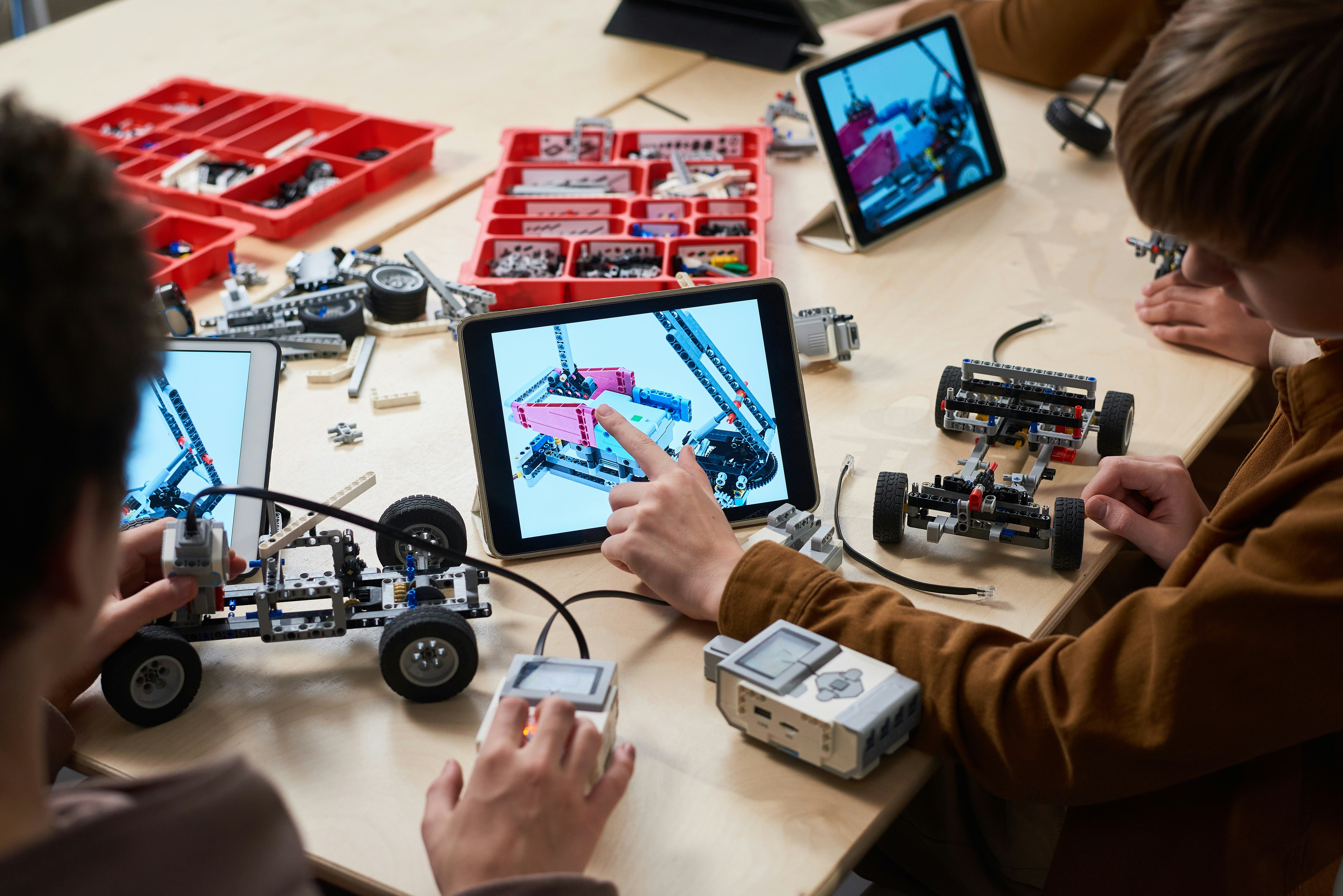
So you’ve taken your ideas and turned them into a model in some way. Maybe this is a tangible, physical product like what’s illustrated above or maybe it’s something far simpler like paper prototyping or a digital mock-up. Congratulations! Now what?
The next step is to test it with real — or the closest you can get to real — members of your target audience. These are your users (in designer speak).
There are three things we look for in a prototype.
Feasibility. Is it possible to create and deliver this prototype to potential customers, clients, users, or other stakeholders?
Viability. If it is delivered, does it have the potential to actually do what we want it to do? If is is viable, does it create any unnecessary harms or complications in its implementation?
Outcomes. When implemented, does it produce outputs and outcomes that seem to reasonably fit our expectations? If not, what are these outcomes?
A case example is available in a short video explainer online here (no slides this week).
If we are evaluating our prototypes, we are going to ask the same three questions about feasibility (is it possible?), viability (is it functional?), and outcomes (can we implement it and achieve some kind of preliminary outcomes?) with the early rough drafts and our penultimate prototype.
In each case, what you learn is what’s working, what’s not working, what else your product or service might be doing, and what might be needed to make it complete.
References:
A case study that I wrote up is available online in New Directions for Evaluation.
I’ve also written about design-driven approaches to evaluation for the American Evaluation Association (a prototype of that post is available here).
Three metrics for design evaluation (Cameron Norman)
Thanks for reading!