



Questions are always welcome in The Design Loft, and this week, we’re channelling our inner 5-year-old and asking WHY? a lot—at least five times. Why? Because this simple technique has demonstrated an ability to connect our interests, decisions, and preferences together and uncover root causes faster and more efficiently than any other method. Refined from its early use in Japanese manufacturing as a quality improvement method, this simple, fun and illuminating method will help you get deep into what you create.
I’ve got some links on service design, design practice, and resources on using design for diversity in people, places, and things.
Over the coming weeks, the lessons will switch to a paid model to help support future development, but the weekly links and tips will always be free. If you like the lessons and want to continue building your own personal library of tools and techniques, consider upgrading your subscription. (I’ll say more in future issues).
I’m happy to have you here. Thanks for your interest, and I hope you enjoy what I’ve put together for you. - Cameron
Elevated Ideas: Links of Interest

Daniele Catalanotto (literally!) wrote the book (and so much more) on Service Design Principles. He’s written many books, courses and a handy online dictionary on service design. If you want to learn how to think about, design, and shape services, there is no one better to give you an introduction than Daniele.
Sustainable collaborations don’t just happen; they are designed. This webinar (video) and set of resources from the Tamarack Institute show you how to put together the right people, processes, policies, and principles to make your collaborations work.
Designing anything (a project, product, or even an evaluation) can benefit from another pair of eyes and constructive criticism. A critique is core to design training. Yet, it’s often hard to take criticism. Steve Magness writes on why it’s so sticky and challenging and how to deal with it more constructively.
Indigenous designer Lesley Hampton shows how a philosophy of being true to you can allow you to connect issues together in your work. Hampton’s designs reflect her Anishinaabe heritage with body positivity, mental health awareness, and functional fashion. She’s an inspiring example of how to connect yourself with your craft.
Habits are a core feature of sustaining change. Atomic Sketches from Kumar Ahir combines habit design with the fun (and usefulness!) of Sketchnotes. Kumar generously provides a fountain of resources and a newsletter for anyone interested in habits, sketching notes, and telling better stories.
This fall, as part of their Design Museum Mornings series, Design Museum Everywhere is hosting a conversation on LGBTQ+ Identity and Celebration in Public Spaces in Cambridge, MA. Tickets are free. If you can’t attend, consider subscribing to their magazine (I do; it’s excellent) for more on issues like this shaping design.
Alex Presa makes a good case for why designers should make passion projects part of their lives all the time, not just when they have time. The benefits include keeping sharp, expanding your mind, and keeping yourself energized by creating things. We don’t always get this from work, so let’s ensure it’s always part of our life.
Hosting an event is an act of design. Using service design principles and thinking, we can turn what might be a pedestrian event into something special. I provide a primer on this topic over on Censemaking.
Design is far from immune to colonial influence. In this week’s resource profile, I highlight an essential text written by OCADU’s outgoing Dean of Design, Dr. Dori Tunstall, on Decolonizing Design. Tunstall speaks of “creating conditions of possibility” by looking at colonialism's legacy and the opportunities to see design from the lens of inclusion, indigenization, and equity, especially in design education. Dori’s work provides an essential point of reflection for designers from all backgrounds.
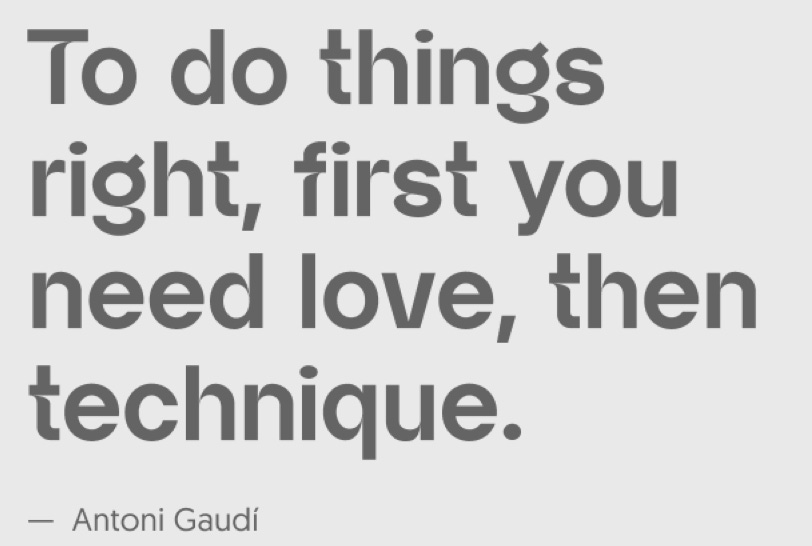
Lastly, I love design and believe that great design is an act of love. I’m not alone.

Today’s Lesson: The Five Whys?
If you spend time with kids, you know about the question, Why? When used with strategic intent, the Five Whys can be one of the most potent ways to get to a more profound rationale, meaning or purpose behind what we do, how we do something, or what we need. Often referred to as a form of root-cause analysis, The Five Whys is a means to get us past the surface statements and into something more meaningful — which allows us to design for what people need, not just what they use.
Henry Ford recognized that people wanted to travel and do it safely and conveniently. They didn’t want a car (back then). It’s been said — not always verified — that if we were to take his customer desires at face value, he’d be giving them faster horses. Ford didn’t use the Five Whys, but his story explains why asking questions about motives can yield exciting results.
Design Method Lesson: The Five Whys
WHAT: An approach to examine the root causes of a problem or issue you’re designing for.
HOW: A simple framing exercise asking people to answer a question of “why” about something five (or more) times
WHY: Enables us to surface more depth of reasoning and motivation behind actions and decisions.
WHEN: Interest in anchoring to people’s experience and values to create more impactful products.
Click the video link here to watch the lesson and hear me walk through it.
A link to the slides can be found here.
I also have a video discussing some of the contexts for using the 5 Why’s and expand upon the example used in the lesson.
Resources on 5 Whys
I wrote up the 5 Why’s Case Study for more on the method and how to use it.
I wrote an article called Going Beyond Asking Why: A New Look at the 5 Why’s that includes some different follow-up questions and provides guidance on expanding your practice of the technique or dealing with more complicated responses to your questions.
The American Society for Quality has an article on the 5 Why’s and 5 How’s and offers a look at how the approach has been used to design quality and design out errors.
A useful academic source on the approach is: Serrat, O. (2017). The Five Whys Technique. In: Knowledge Solutions. Springer, Singapore. https://doi.org/10.1007/978-981-10-0983-9_32
Go Forth and Design!
Happy designing! Please contact me with questions or comments, or try the chat feature or the Substack Notes tool. It’s way less mean, cluttered and jerky than other platforms and provides a chance to connect with fellow readers. I’m here to serve and help you make better things while making things better.
Thanks for reading and subscribing. Please share this with others and provide your thoughts on what you like and would love to see in future lessons or posts.