


Welcome to another issue of The Design Loft.
Despite the title, today’s issue is highly optimistic and positive. It’s anchored around today’s lesson on the method Future Regrets, which I sometimes describe as the least expensive strategic planning tool you’ll ever use. Nothing achieves more results, faster, and cheaper as a package than this method, which builds on lessons learned in the past and present and projects it into the future.
There’s so much going on this issue that I’ve added an events section to showcase the many worldwide events. I also have many links to share and a resource review of one of my favourite works of change-making and more. A lot is packed into this issue.
Let’s step on that elevator, get the coffee going and make something special.
Elevated Ideas: Links of Interest
Social Innovation Canada has created a free, extensive, searchable online facilitator toolkit. This toolkit allows you to sort through the type of situation, population, issue, and participant qualities to help shape your next social innovation project.
When you picture a rock concert, what comes to mind? If it’s a stage, speakers, and arena-like setting, you’re in for a shock when you look at the new Sphere in Las Vegas. It will upend your design ideas for music and performance, not seating.
Surveys help us learn about our influence and impact, yet many are poorly designed. Sheila B. Robinson is here to help you make yours better. Her blog is a great place to learn how to design and make better surveys and where to learn more.
Students learn better when schools are designed well. Ingrid Fetell Lee’s profile of school design will shape your thinking about learning spaces. If that doesn’t do it, check out Matt Keene’s use of a garden as a classroom.
The UK Design Council has its Design For Planet Festival coming up (see events below) and has created a resource bank for creators of all types to shape their work in sustainable and planet-centred ways. Create better things with better design practices.
The documentary Design Canada examines how a single period in Canada’s history shaped a visual and creative culture for generations. It’s a fascinating look at the people, processes, and products that shaped Canada’s visual design culture.
Design Lobster highlights some commonplace objects that are significant in our lives. The latest issue profiles the Monobloc chair (you’ll know it when you see it) and how this simple design was replicated worldwide.
Lastly, seeing the future through the lens of fiction is a powerful and proven way to realize possibilities never before realized. Dre Labre’s Design Fiction Daily newsletter poses possible futures to help you connect today with what’s (maybe) coming.
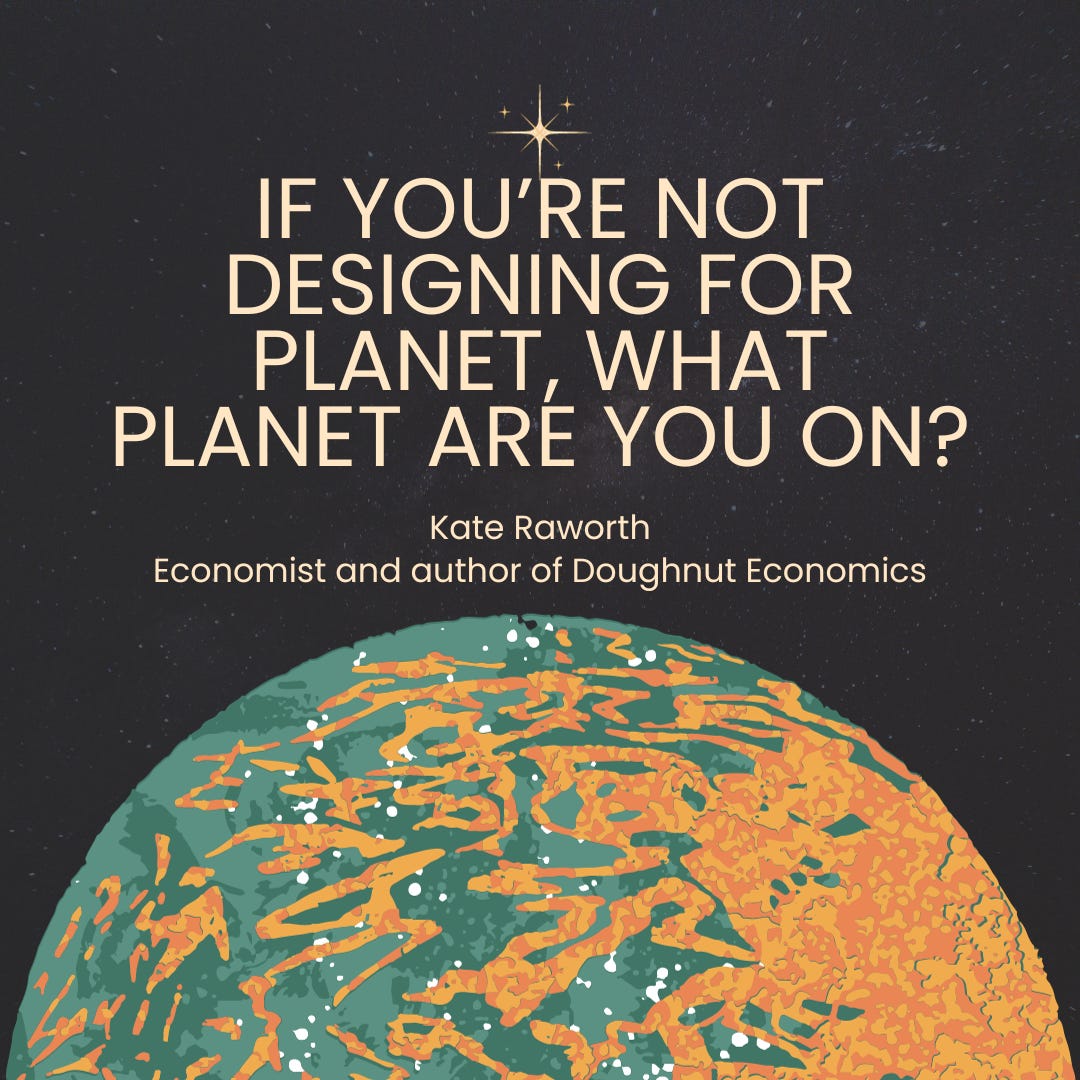
Calendar of Events
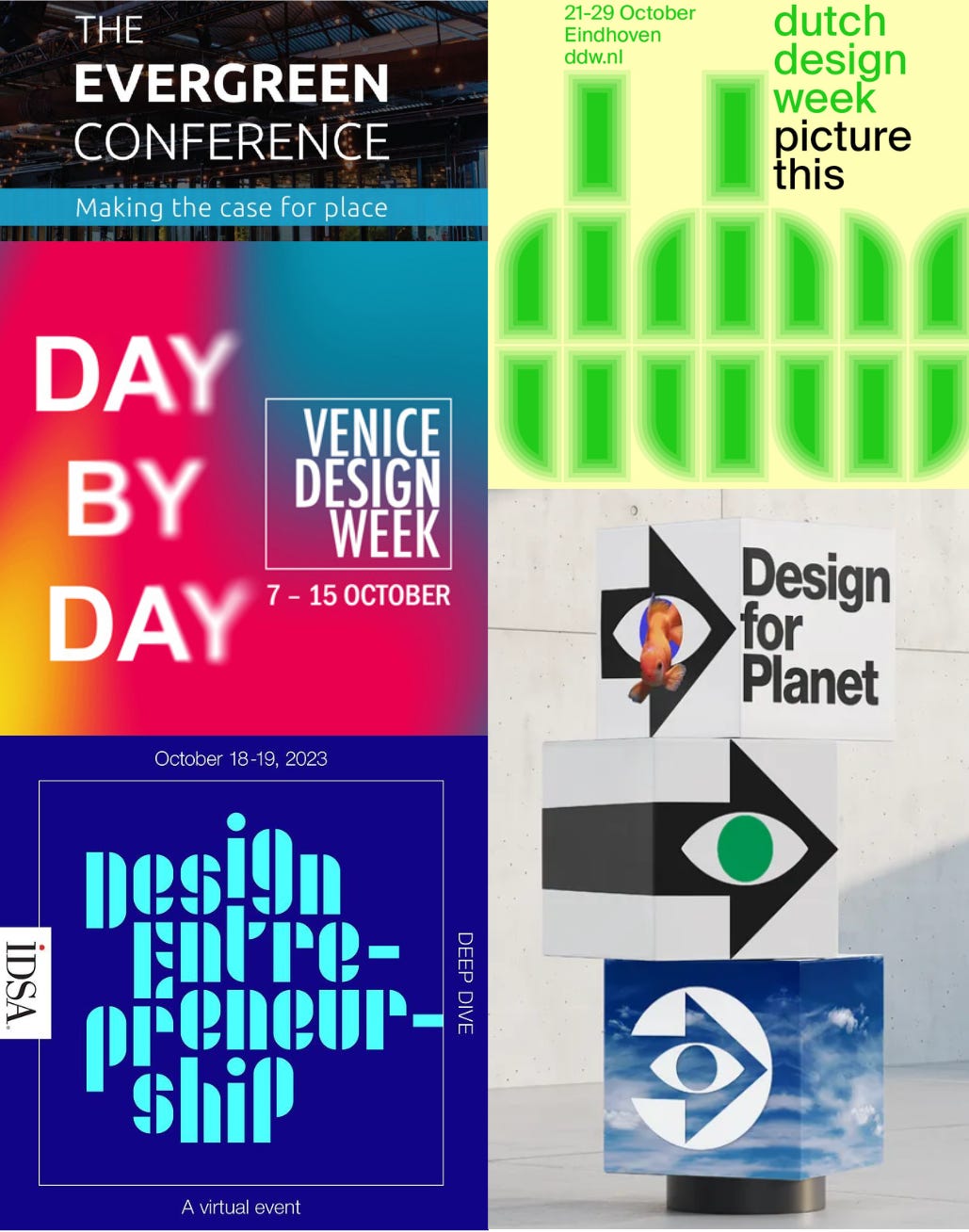
What a busy time for design-related thinking, learning, sharing, and doing with others. Some are free, but registration is required for all.
Now: Venice Design Week (Venice, IT) and RSD (Systems Thinking + Design) conference (globally)
October 10 - 15: The American Evaluation Association Conference (Indianapolis, IN - live)
October 16: The Evergreen Conference (Toronto, Canada - live and remote) on place-based design
October 17-18: UK Design Council’s Design for Planet Festival (virtual)
October 18-19: Design Entrepreneurship Deep Dive (virtual)
October 21-29: Dutch Design Week (Eindhoven, Netherlands)
Review: Massive Change
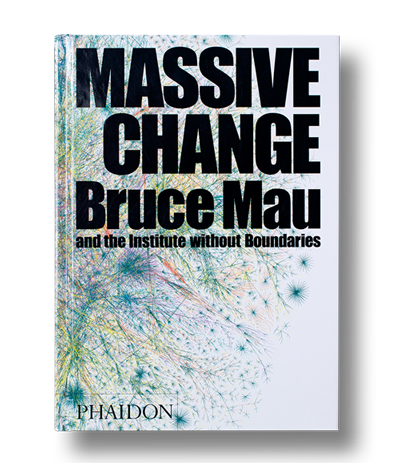
Massive Change is based on the 2005 exhibit of the same name that launched Bruce Mau into the stratosphere of change-making designers. The book, still available, is the precursor to the current Massive Action Network. Why read it? Its bold assertion is that we design our world, and only through realizing the impact of what our designs have — positively, negatively, and otherwise — can we create the world we want. This book is filled with real-world examples, visionary possible futures, and case studies of how design has been used to shape our landscape and institutions. I find it inspiring.
Even though it’s 20 years old, it feels as fresh and relevant today as it was first published. Massive Change shows us that designers, evaluators and change-makers can make a massive difference.
Today’s Lesson: Future Regrets
Learning from our actions involves understanding what we did well, what didn’t work out, and what we can do about both moving forward. Great strategy is an act of design: we set goals, devise a plan, and implement actions toward a direction. But what happens when we forget what we’ve learned, fail to integrate the lessons, or get distracted?
We’ve all experienced it: regret. Regrets often come after something is done or something is left undone. Future Regrets puts the regret ahead of this. What this method does is get you to imagine what might happen if you didn’t do something. It imagines a goal left unattained, an action not taken, or a choice not made. This can spur us into considering what conditions need to be in place to ensure these actions are taken. This is where this method becomes so valuable for strategic designers.
Design Method: Future Regrets
WHAT: A futures-driven approach to strategic planning and design.
HOW: An exercise that builds on lessons learned to forecast possible future regrets due to actions taken (or left untaken).
WHY: An accountability target can get us to see what the consequences of inaction look and feel like
WHEN: Following up on an event or lessons-learned activity.
A related approach to Future Regrets is using mental time travel and how futurists use this to help us make better decisions today.
The video lesson is available using this link. A transcript is always available if you’d rather read it or wish to skip to specific sections.
The slides are available here.
References:
Jane McGonigal (2022): Mental Time Travel is a Great Decision-making Tool — This is How to Use It. TED Ideas.
Tomas Oppong (2022): The Regret Minimization Framework.
Cameron Norman: Future Regret Method.
Service Design Network (2022): Futures thinking: a mindset, not a method.
Dan Pink (2022): The Power of Regret. New York, NY: Penguin Random House.
Thanks for visiting The Design Loft this week. Please share your thoughts and comments using the link below or on chat (see here). If you happen to know someone who might find this helpful, please share it using the buttons above.
Thank you for reading, subscribing, and spreading the word about The Design Loft with others you think might benefit. Elevate your impact by taking action on something you’ve read here so you don’t have any regrets in the future 😉.
Thanks so much for sharing the link to my blog! I do love writing about survey design, and there's always more to learn to create surveys that yield meaningful, actionable data.
Great video Cam! I learned a lot. I immediately applied this work to one of our current homeschool projects - Learning to Create a Vision of a Future We Want.
Chiara, 11, is imagining and designing a vision of her 25 yo self. Actually 3 different scenarios of her 25 yo self and then she will craft a final vision from those three. She will then describe the 25 yo self to the 11 yo self (current self) and describe how it all happened including decisions made, avoided, successes, failures, and recommendations/advice. We are using many approaches to "crack open" the visioning process and begin to see all of the options open to her over these next 15 years. One of our approaches is to interview others who have lived those years from 10-25 yo and ask them about what it was like when they were 25 and how it all happened. I am thinking that we will try the future regrets approach after we have interviewed a few folks and she has a long list of options/information in front of her of things she might do (or not want to do) in the next 15 years.
It seems the order of our work on this is very important so that it is doable and enjoyable for her and helpful to her and us (as parents). Thank you for the detailed video about how to go about it.
Keep it coming.