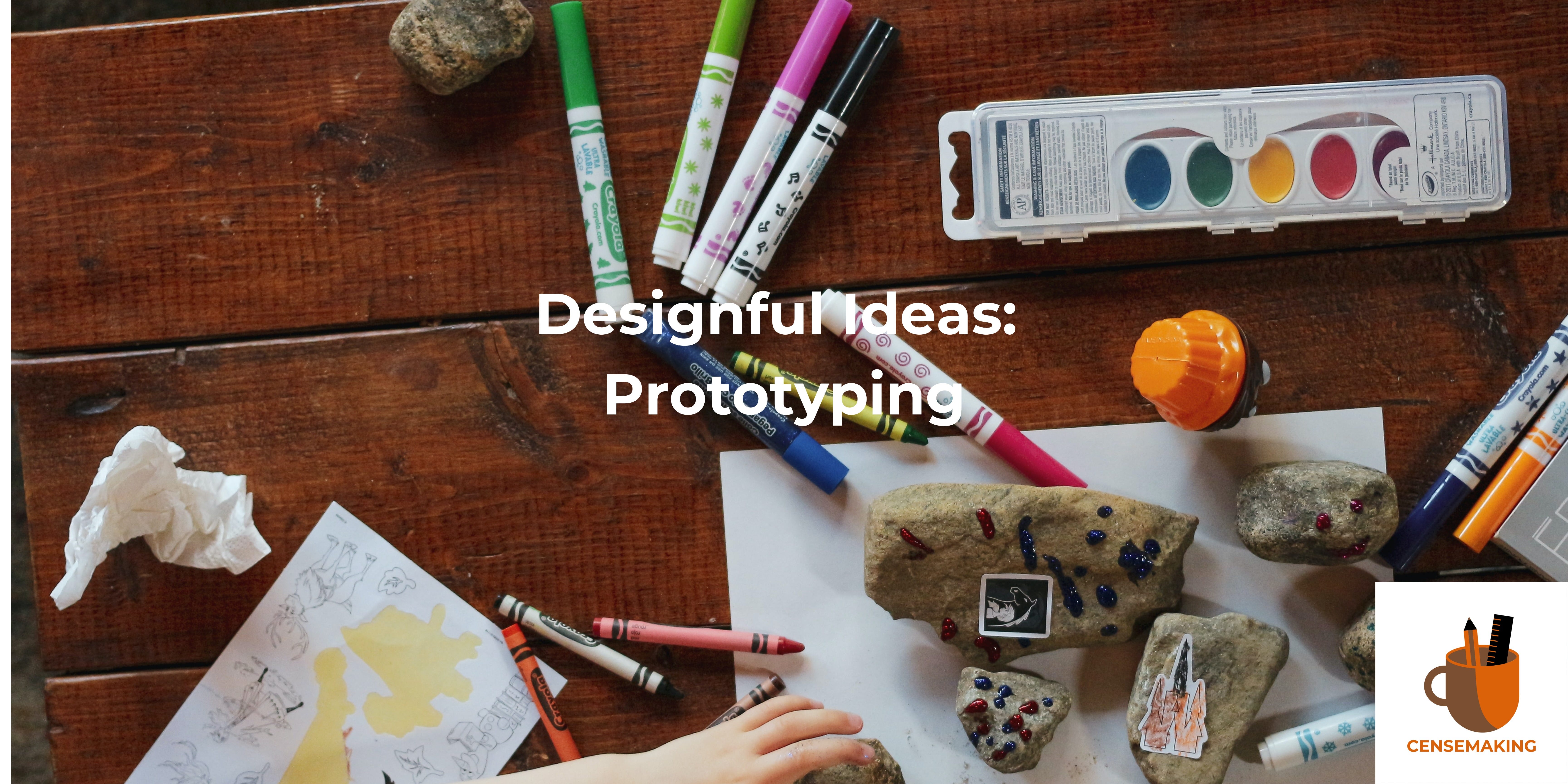
Welcome to The Design Loft! In keeping with my aim to provide you with some designful inspiration, tools, and ideas about making better things (and making things better), we will explore prototyping as our feature lesson.
More importantly, I’m continuing to explore different formats for the lessons, content and timing of the publishing of this newsletter. The aim is to learn about you, your interests and get data and feedback on how The Design Loft is used. This is a form of prototyping — a central tenet of data-driven design.
I’ve also got some excellent links on failure (and why we might not want to glorify it as we do), why some people hate Houston (it’s about city design), designing conversations (not communications), and much more.
Thank you for reading and continuing this experiment with me. Please add your comments and send me feedback, as I love learning how my prototypes work 😉 and how to serve you better. - Cameron
Elevated Ideas: Links of Interest
Do you struggle with creativity? The problem may be your definition of what it means to be creative, and this essay from educational psychology professor James C. Kaufman will help you redefine your definitions and unlock creative potential.
City design shapes livability and transportation. This video from Not Just Bikes illustrates how design choices influence how we engage with our city in ways that can be extended to how we set up our neighbourhoods and even our organizations.
Failure is often seen as a critical factor in achieving design success. Wes Kao thinks we’re glorifying failure a little too much and pulls examples from startups, founders, and other cases to dive deeper into whether failure is good, bad, or something else.
Are you a designer, evaluator, or freelancer who delivers pitches (proposals) to prospective clients? Should you? Abby Bamford writes in Design Week that this idea of pitching ideas ought to be pitched and makes a case for why it’s good for everyone.
Erik Stolerman Bergqvist argues design competence is a complex of four sets: mind sets, knowledge sets, skill sets, and tool sets. He illustrates how to nurture these competencies to make organizations become more designerly.
Dark Matter Laboratories argue for a shift from communication design to conversation design. By nurturing bi-directional relationships between designers and consumers, we create economies of care, not just consumption.

Today’s Lesson: Prototyping
This is the first lesson on prototyping, but there will be more. If you remember from our earlier issue, we introduced you to prototyping when we covered the Design Helix. The Interaction Design Institute defines prototyping this way:
Prototyping is an experimental process where design teams implement ideas into tangible forms from paper to digital. Teams build prototypes of varying degrees of fidelity to capture design concepts and test on users. With prototypes, you can refine and validate your designs so your brand can release the right products.
Prototypes can be made of paper, clay, Play-Doh, metal or anything that brings ideas to life in some physical or tactile form, even if the creation is digital. Even in digital products like websites, paper prototypes can help map out the screens, buttons, use functions, and overall interface ahead of creating costly full versions.
“If a picture is worth 1,000 words, a prototype is worth 1,000 meetings.” - Tom and David Kelley
Prototypes are usually viewed as low or high-fidelity prototypes. A low-fidelity prototype might use paper, crayons, or simple sticky notes arranged to represent real things (for example). A high-fidelity prototype could make a physical mock-up of a setting, including some realistic signage (for a service design), or have higher-quality images. Both are useful and have their place. I advocate you start with low fidelity early and often and graduate to higher fidelity as you go.
The higher the stakes for the design, the higher the fidelity of your prototyping. Think of a prototype as a pilot test, where you’re building something you want to explore and see if it works, how it works, and where and with whom before you put it out into the world. For this reason, evaluation is a critical partner in any good prototyping exercise.
This week, the lesson begins with the references below. We’ll go through these references and ideas in more detail in a future issue. In the meantime, the aim is to use the chat function, comments, and feedback tools through Substack for you to ask questions to shape what the next prototype of this lesson looks like. Nothing like doing this in practice!
References
Prototyping User Experience. UX Matters.
What is a design prototype? The complete guide. Sketch App Sources.
Prototyping. Usability.gov (US Government)
Thanks for reading, subscribing and learning with me. Let’s keep the chat going.